Report: Town meeting “Equalize the Ecosystem” 15.10.26
On Thursday 15 October, we put artists based in Rotterdam in the spotlight. With an enthusiastic group of people, we gathered at the temporary location of the Rotterdam Library to explore how electronic artists are navigating Rotterdam and what we can do to support them.
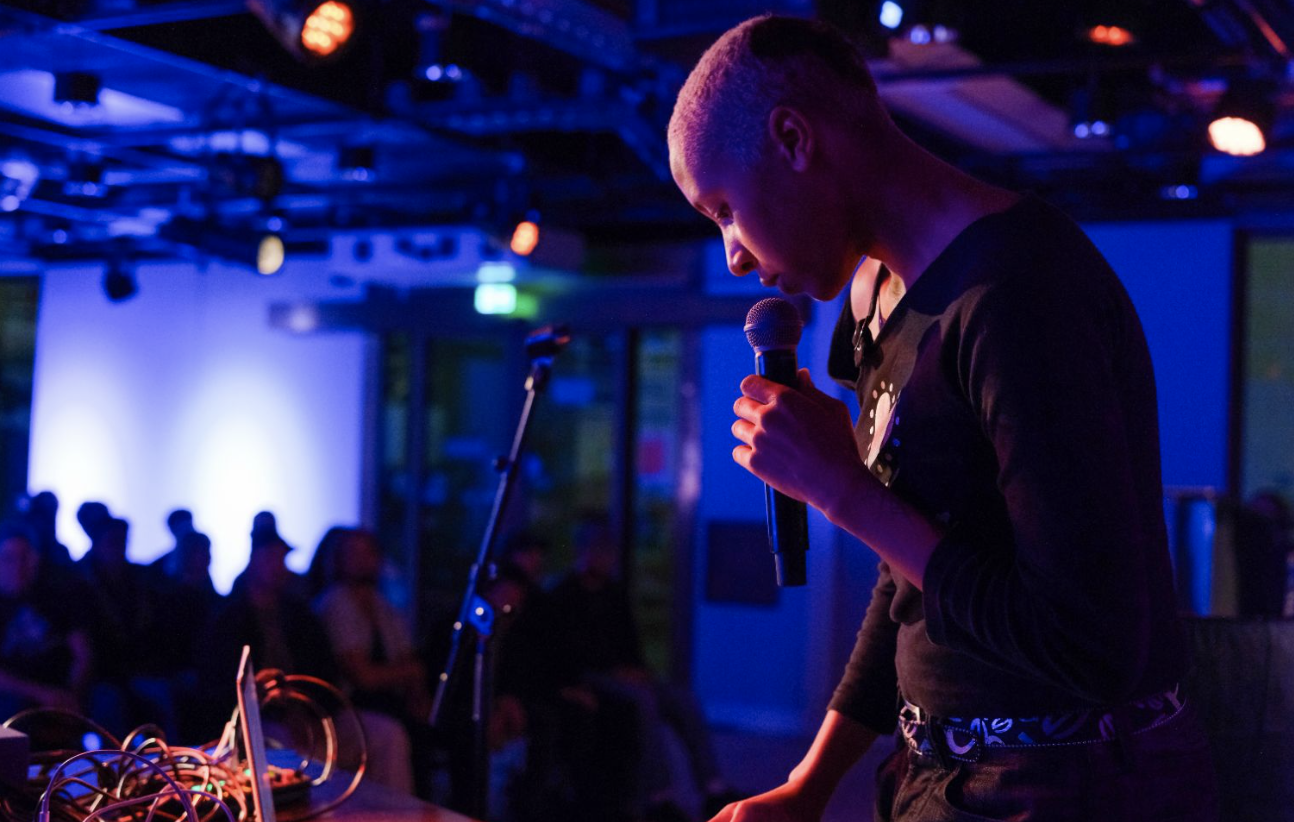
This is important, because the ecosystem is fragile. Producers are not always paid when their music is played, and it is often unclear how as an artist you can actually build a sustainable practice in Rotterdam. Just as these artists are bringing the nightlife and music culture of the city to life. With the city conversation Equalize the Ecosystem, we explored together what buttons we can press to make that ecosystem more equitable. Led by moderator Seb Harris, we were taken on a journey through a program of panel discussions, performances and a presentation, all centered around the Rotterdam artist. The artist was also literally at the center, with beautiful performances by vixnde, Michline Plukker and Rajiv Daryanani.
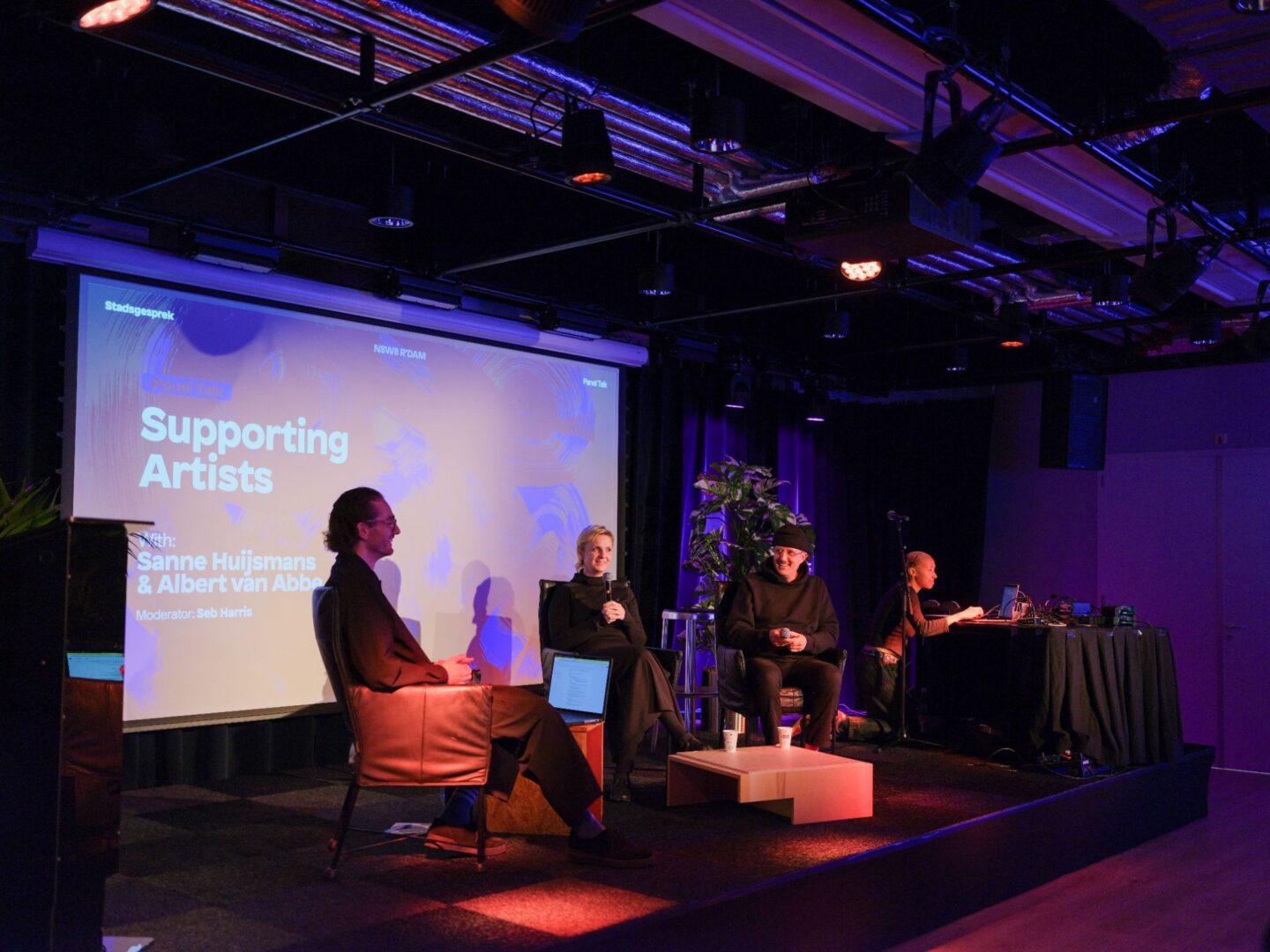
The first panel, with Sanne Huijsmans and Albert van Abbe, focused on infrastructure and ways to support artists. Sanne Huijsmans is part of Shunter. She is an organizer, DJ, and club manager. Albert van Abbe has been in the music industry for a long time. He started out producing techno and later joined Dekmantel. In addition, he designed the new lighting installation in the Nexus room of CLUB RAUM. Although the conversation took place in the context of Rotterdam, we also looked at the infrastructure for artists elsewhere in the Netherlands as an example of how we could apply this in our own city.
But what is the ecosystem actually?
The music industry ecosystem consists of many subsystems. There is the ecosystem surrounding the producer: how do you get your music into the world and how do you move from performance to performance? There is also an ecosystem in which you can receive money for making music. Seb defines it this way: the producer makes music, sells their music, or streams it. Sometimes this results in a performance, and then a tour. This involves managers, agents, and tour managers, and everyone makes money in this. But at the heart of all this is someone who makes music in their studio.
The ecosystem has a huge number of components that we are constantly defining. That is something that we actually need to map together. What stood out in the first conversation was that there are more opportunities to develop your artistic skills and support yourself financially if you know how to find the right help.
Grants
Albert mentioned that artists benefit from spreading their risks. You might get a little money from a performance, but also from funds. To apply for those funds, you create a plan, and that forces you to think long-term about your artistic path. Within the ‘funding ecosystem’, there are many components for which money can be applied for. For example, if you want to create new work and spend a month in the studio to focus on it, you can apply for funding to cover your living costs. If you are touring outside of Europe, there is a fund that supports your travel and accommodation costs. And even if you want to work interdisciplinary with another artist, for example on an audiovisual installation, there are funds for that as well. It is therefore important to map out these funds. A good starting point is fondswervingonline.nl, Here you can find an overview of a large number of subsidies that you can use. This is a paid platform, however.
Asking for help and starting small
The possibilities certainly exist, but navigating the structure of fund applications can be difficult. There are many rules you need to follow. It often takes a lot of time to work on an application, and you never know for sure if it will be approved. Additionally, there are a lot of people applying for a grant. Sometimes this can make you feel a little defeated.
It is therefore good to know that you can always ask for help from the foundations themselves. Call them or arrange to meet them to discuss your application together. Additionally, you do not always have to apply for large sums of money right away. There are also many opportunities that work on a small scale. Sena, for example, has a fund (Sena Muziekproductiefonds) with which you can start with as little as 3,000 euros. A small amount can already make all the difference. Would you like to learn more about this? We have attached the PDF from Sanne, in which she takes you through tips for applying for funding.
How can we support each other in a vulnerable ecosystem?
The music ecosystem is fragile. There is little funding, and yet artists and organizers continue to take risks with experiments and programs whose outcome is uncertain. How can we support each other in this?
Part of the answer lies with club visitors. The guest list includes some out-of-date names. By buying a ticket, you financially support a club and show that you believe in their vision. The sooner you buy, the more space a club has to keep experimenting.
A second question is how we can change the way music is paid for. Aslice let DJs give part of their fee to the producers whose tracks they played, but the platform didn’t make enough money to survive. That only made the problem more visible: very little of the DJ fees ends up in the hands of the music creators. Volunteering is apparently not enough, and some DJs didn’t even know it was possible.
Valuable additions came from the audience. There are still many voices missing, such as mix engineers, DIY label runners and promoters who do this alongside a full-time job. There was also a call for solidarity: open your studio up to other producers, or let your club be used outside opening hours. And anyone who doesn’t want to depend on social media should especially be present. Go to events and show your face, because through real connections music travels surprisingly quickly.
Finally, our own team pointed out the importance of access to real estate. Using Export as an example: because the property is owned by the owner, the club can continue to exist without the pressure of temporaryity. This allows club owners to invest more time and money in their plans without worrying. We concluded with the question of what programs Rotterdam can set up to support creators. The Music Hub project in Brabant is an example of this, in which ten artists are selected annually who receive financial support and are also booked at festivals in the region.
Register your tracks, Sena does the rest
Sena was briefly mentioned earlier in the evening. This is the platform that allows musicians to collect money from their tracks. Simon de Koning spoke more about it. For example, Sena has a music production fund to make a record and a fund for socio-cultural events. The funds are managed by the musicians themselves, who therefore decide where the money goes. They are funded with 3% of what Sena collects annually. In 2025, Sena raised a total of about 100 million euros.
Sena also collects money from electronic music events, but often does not know who the music being played is, which prevents them from paying artists. Therefore, it is important to register for this on the website. In electronic music, you are often both a writer, performer, creator of the recording, and the label at the same time. For your role as composer, you receive money through Buma/Stemra, for your role as performer and producer through Sena. This also applies to the recording that is being played. Your recording receives an ISRC code, an international code that identifies the file. Sena listens using fingerprinting at radio, festivals, and events. This provides them with data from 78 countries and links it to the registered repertoire of the rights holders. The money is held for three years, so it is also possible to be paid retroactively. Half goes to the musician(s), the other half to the producer or the label. In this case, the producer is not the music producer but the one who finances and coordinates the recording, similar to a film producer. If you are both, then you create two accounts. So, register and then Sena will ensure that you are paid via the following link: https://sena.nl/.
From bedroom to studio
After all the explanation about funds and rights, the focus shifted to another part of the ecosystem, the producers. What does that ecosystem look like when you’re right in the middle of it? In the second panel, Najel Monteiro and Eddy Kennedy spoke about their experiences as musicians in Rotterdam. Najel is a DJ and producer, born and raised in Delfshaven, where he is also active as a cultural director. Eddy produces and DJs under the name Kessler. In addition, he organizes events, makes radio, runs a label, and mentors young creators as a mentor.
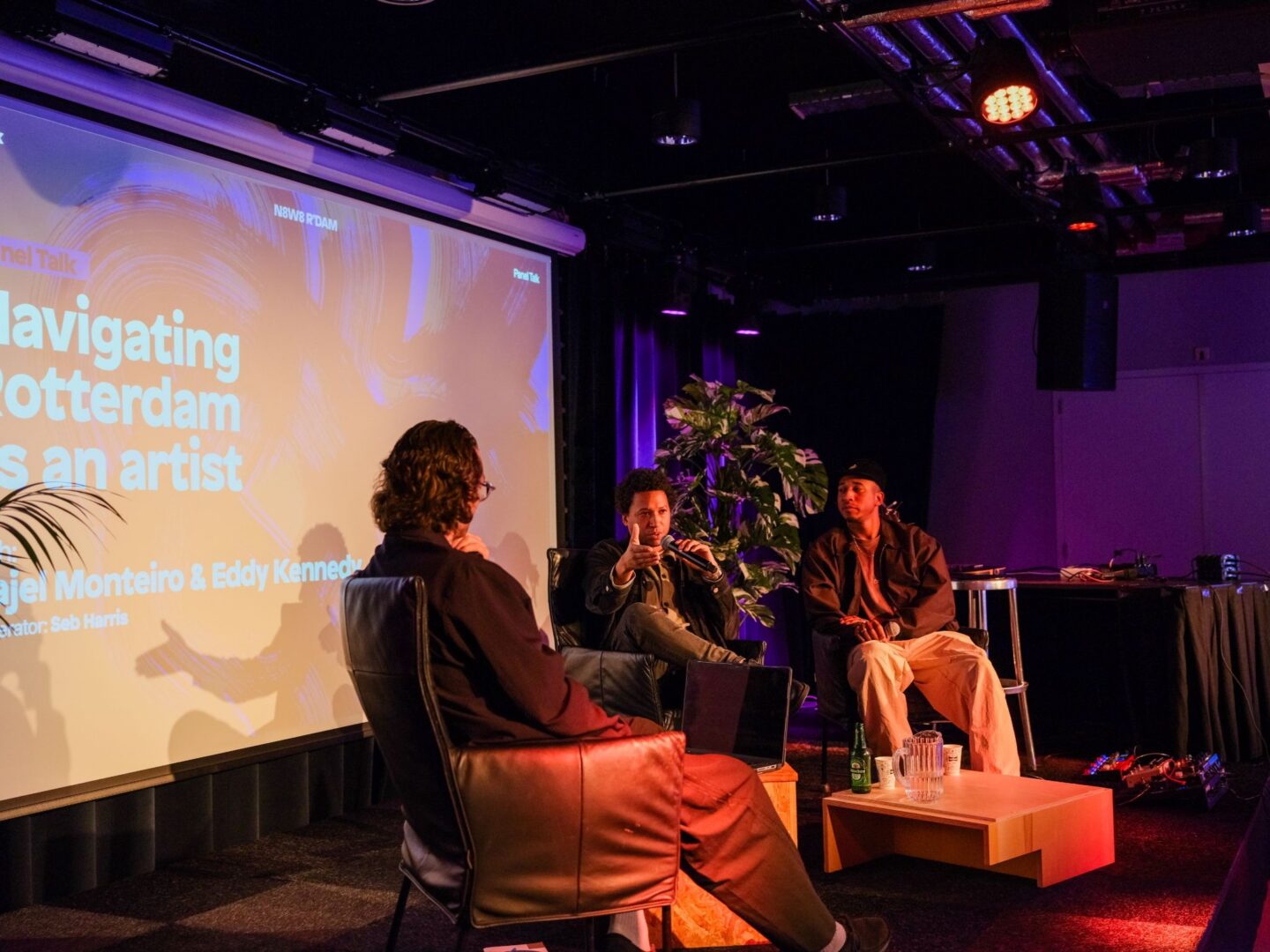
When asked how their experience as artists has changed over the past ten years, Eddy said that for him it began as a bedroom producer, driven by passion and love for music. That love is still present ten years later, even though the work has become more serious and professional. He now looks differently at the outside world and no longer only from his bedroom. Najel emphasized that there wasn’t always a place at the table for creators like him. Festivals mainly programmed big names, and anyone who asked for permission usually got a no. Therefore, he organized it himself with friends and booked people around him. According to Najel, that fits with Rotterdam. A city that was built from nothing, with the mentality that you build it yourself when there is nothing. He acknowledged that social media and algorithms make it harder to stand out. Still, he remains hopeful and sees opportunities, especially when you look around and help each other, for example by lending things and spaces to organize something.
Then the conversation turned to the tension between enjoying work and the business side of it. Eddy stated that you make music primarily for yourself and for fun. It helps to surround yourself with people who support you, such as friends and other creators. The creative process must always come first. At some point you move into the music industry and you encounter questions such as which label suits you and how to market yourself. But if you keep the focus on yourself, he believes you will get there, because people see that. Najel agreed, he makes music more for fun than to just make money from it. The business part, including the compromises to fit into a category, is allowed to exist, but the passion comes first and you shouldn’t lose sight of that. He said it took ten years before he found his own sound. He had studied Detroit techno, mastered plugins and low-end equipment, but still couldn’t find his own sound. From that he learned that success really comes down to how well you can be yourself and that there is value in that.
Who is wearing the nightgown?
The ecosystem is fragile, but the evening also showed that there are many opportunities, from small funds to payments via Sena. At the same time, the gap between starting out and working professionally is still too big to bridge. In both panel discussions, it became increasingly clear that we need each other. Share your studio. Open your club during the week or during the day for anyone who wants to practice. Buy your ticket in advance so organizers know what to expect. Small gestures that can make a difference.
And for the city, this requires recognizing nightlife even more as culture and creating structural space for it. Because at the beginning of every full dance floor, the producer is still working on music in their studio. The music brings the night, so let’s also carry the musician along.
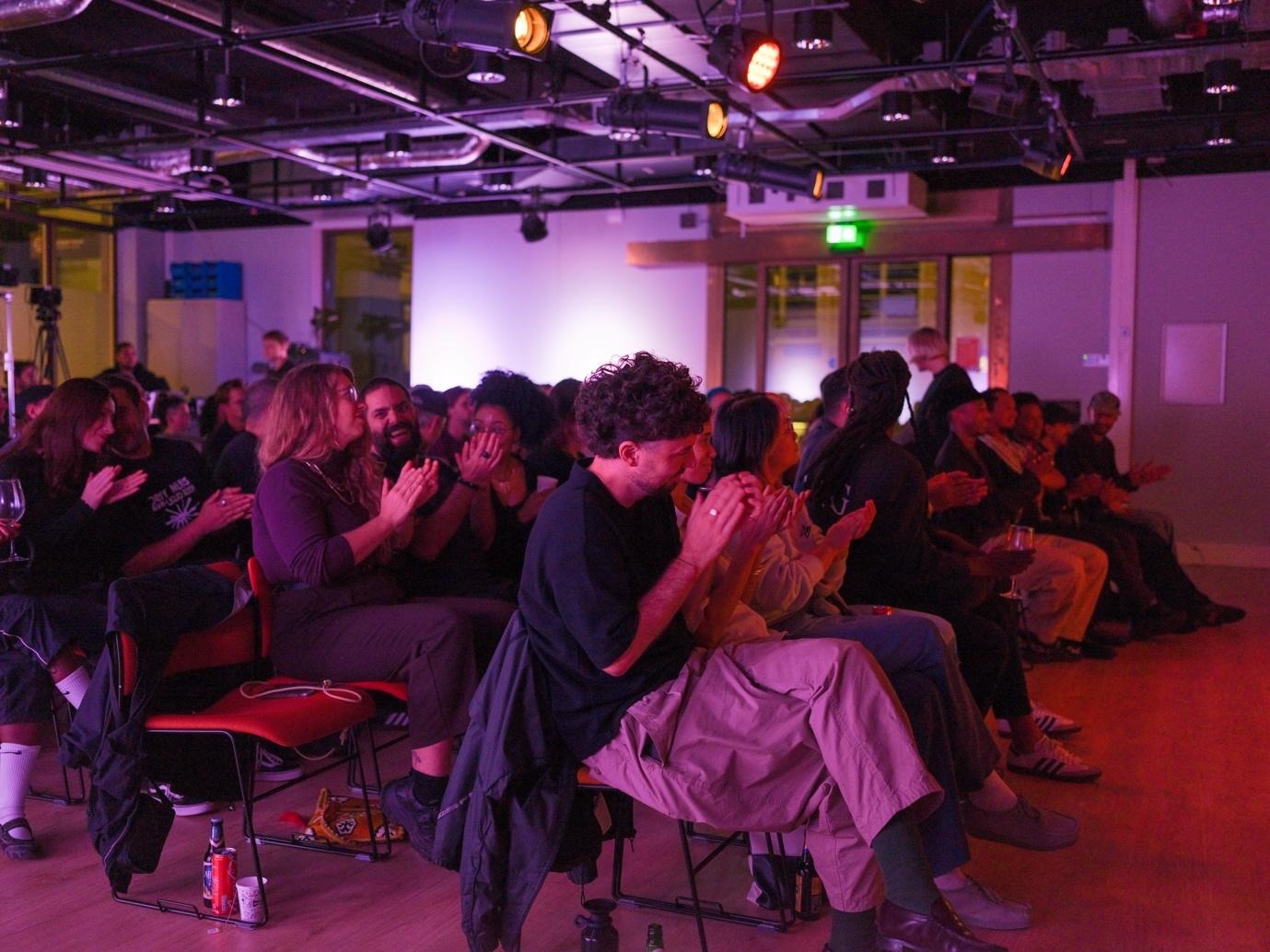
Photos by Fenna de Jong

 English
 Dutch